
Noise & Sound
Carpeting: The best flooring to prevent unwanted noise
Noise and sound are a burden in our daily lives. Learn more about the benefits of textile floor coverings in residential and work areas to reduce sound and noise.
Carpeting helps prevent unwanted noise
Noise is one of the most ubiquitous environmental burdens of our time. Every day, we are exposed to many unavoidable sources of noise: noise from road traffic, airplanes, or even construction work. The consequences are devastating:
- Excessive noise impairs concentration and can lead to health problems. Extreme noise even causes pain and can lead to hearing loss.
- Noise disturbs our sleep and reduces vitality and concentration; it causes stress, induces hormonal changes, and increases the production of cortisol and adrenaline.
- Noise leads to nervous, digestive, and cardiovascular diseases and generally impairs human hearing.
- A study conducted in Berlin has shown that the risk of heart failure is increased by 30% in people living on noisy streets. (Source: UBA, Press Information 19/2004)
Noise in residential areas: Not a good neighborhood
Impact sound in residential buildings becomes a problem when it reaches an excessive level. Often, impact sound can hardly be avoided due to structural conditions. This then creates a strong feeling of lacking control over one’s own environment, even if the person upstairs is engaged in a perfectly normal activity in their apartment.
Impact sound from neighboring apartments can indirectly affect health through various mechanisms. The extent of the impact on health and well-being depends on the individual’s sensitivity, health profile, living circumstances, and perception of the noise problem or control over it.
Even if only low noise is often generated by impact sound, this can under certain circumstances lead to impairments, which manifest as follows:
- Sleep disturbance
- Disturbance of one’s own activity or discomfort during normal activities
- Up to the feeling of annoyance and resulting emotional reactions
Activities such as resting, watching TV, and other rather quiet activities are usually moments when people feel disturbed by unwanted sounds and noise. This can not only lead to emotional reactions such as anger but, in the worst case, also cause serious health impairments, from anxiety to depression.
Noise in residential areas most often leads to tensions and disputes between residents, sometimes even to physical assaults.

Of all flooring materials, carpeting is the “number 1 noise killer”
Choosing the right flooring can make a decisive contribution to airborne sound insulation. Carpeting significantly reduces reverberation, as it absorbs more than ten times more airborne sound than any other flooring. By creating more tranquility, carpeting significantly increases well-being.
Impact Sound Reduction through Carpeting
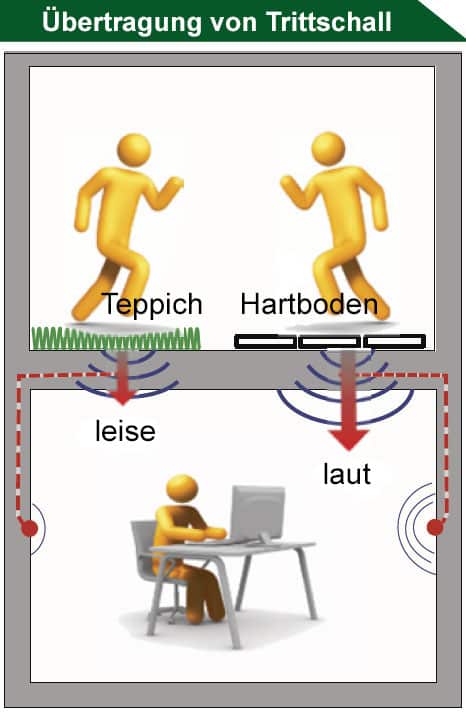
Carpeting absorbs more sound from neighbors than any type of hard flooring. Sound transmission through floors is an important issue, and impact sound is responsible for 60% of all complaints about noise in residential areas (according to relevant studies). And then there are other sources of household noise, such as technical systems: elevators, water pipes, etc.
How Impact Sound is Transmitted
Impact sound is primarily transmitted through the floor but can also reverberate through the walls.
Sound Level and Duration
Carpeting generally ensures a lower sound level than hard floors. In particular, the reverberation of a sound is significantly shorter. Carpeting reduces sound and noise where it originates, within an apartment:
- Carpeting absorbs sounds that are “reflected” from walls and surfaces of, for example, furniture.
- Carpeting absorbs impact sound
- Carpeting creates a “muffled atmosphere” that makes conversation situations “quieter” from the outset.
(Source: The Building Performance Centre, Napier University, Edinburgh, 2004)


